A chimney can look perfectly fine from inside your home and still have problems that need attention.
When you look into the fireplace, you can usually see the firebox and perhaps part of the flue. But much of the chimney system is hidden behind walls, above the roof, or several feet above the fireplace opening. Damage, creosote buildup, water intrusion, and liner problems can develop in these areas without giving you an obvious warning.
That is why a professional chimney inspection is different from simply looking at the fireplace.
At A Step in Time Chimney Sweeps, we inspect the parts of the chimney that homeowners cannot easily see. Here are some of the problems that may be found during a professional inspection.
Why a Chimney That “Looks Fine” May Still Have Problems
Chimneys are designed to contain and vent smoke and combustion gases safely out of the home. Because most of the system is enclosed, many problems can develop without being visible from the living room.
The flue extends from the fireplace to the top of the chimney. Between these areas are the smoke chamber, flue liner, masonry, and other components that all need to work together.
A visual check from the fireplace opening cannot tell you what condition these components are in.
Professional chimney inspections use trained technicians, specialized lighting, and, when required, camera equipment to examine areas that are otherwise difficult or impossible to see.
Hardened Creosote Buildup
Creosote is a natural byproduct of burning wood. It can accumulate inside the chimney as smoke travels through the flue.
Not all creosote looks the same.
Some deposits are loose and flaky, while others become sticky, thick, or hardened over time. Heavier, glazed deposits can adhere strongly to the flue walls and may be difficult to remove with ordinary sweeping methods.
The problem is that homeowners may not realize how much buildup is present simply by looking at the fireplace.
A professional chimney inspection can help determine the location and condition of deposits and whether cleaning is necessary.
If significant creosote is present, it should be addressed before continued fireplace use.
Cracked or Damaged Flue Liner
The flue liner is an important part of the chimney system. It helps contain heat and combustion gases as they travel toward the outdoors.
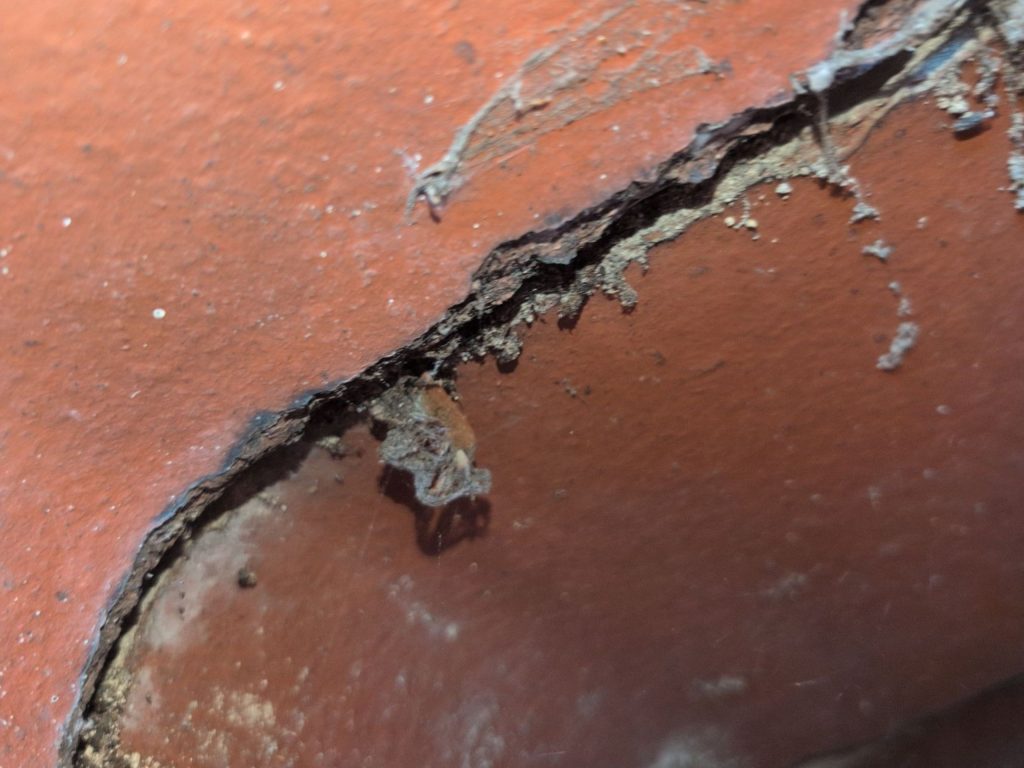
Clay tile liners can crack or deteriorate for several reasons, including excessive heat, chimney fires, moisture, freeze-thaw cycles, and age.
A crack several feet above the fireplace may be impossible to see from the firebox.
That is one reason a Level 2 chimney inspection can be important when specific conditions call for a closer examination. A camera inspection allows the technician to document the interior of the flue and look for damage along its accessible length.
If you have had a known or suspected chimney fire, a professional inspection is especially important. A chimney can sustain liner damage even when the fire did not leave obvious signs inside the home.
Chimney Crown Damage
The chimney crown is located at the top of the chimney. Its job is to help direct water away from the masonry and protect the structure from moisture.
Over time, the crown can develop cracks, deterioration, or other damage.
Once water begins getting into areas it should not, it can contribute to masonry deterioration, damaged mortar joints, and other moisture-related problems.
The crown is also easy for homeowners to overlook because it is located on the roof.
During a professional chimney inspection, the technician can assess the visible condition of the chimney crown and look for signs that water may be getting into the chimney structure.
Damaged or Failed Flashing
The flashing is located where the chimney meets the roof. It creates a seal around this opening and helps prevent rainwater from entering the home.
Flashing does not necessarily fail all at once. Sealants can deteriorate, metal can corrode, and movement between the roof and chimney can eventually create gaps.
The first sign of a flashing problem may not appear around the chimney at all.
You might notice a water stain on a ceiling, moisture around an attic area, or deterioration in masonry near the roofline.
A professional who examines the chimney from the roof can inspect the flashing and identify visible signs of failure before water damage becomes more extensive.
Problems Inside the Smoke Chamber
The smoke chamber is located directly above the firebox and below the flue. It helps guide combustion gases from the fireplace into the chimney flue.
Because this area is exposed to high temperatures and combustion byproducts, it can accumulate creosote and experience deterioration over time.
Older fireplaces can have smoke chambers with rough masonry surfaces or stepped construction. These surfaces can provide places for deposits to collect.
The condition of the smoke chamber is not something most homeowners can properly assess from the room.
During a professional inspection, the technician can use appropriate lighting and inspection methods to look for buildup, deterioration, and other visible concerns.
Masonry Deterioration
Brick and mortar are exposed to rain, snow, temperature changes, and repeated heating and cooling.
Over time, mortar joints can deteriorate and bricks can crack, spall, or become loose.
Some exterior masonry problems are easy to spot from the ground. Others may only become apparent when the chimney is examined more closely, particularly around the crown, roofline, and upper sections.
Catching masonry deterioration early can help prevent water from penetrating deeper into the chimney structure.
What a General Home Inspection May Not Tell You
A general home inspection is valuable when buying or selling a property, but it is not the same thing as a professional chimney inspection.
A general inspector may identify visible concerns with the fireplace or chimney. However, a chimney professional has specialized training and equipment for examining chimney components and identifying conditions that are specific to these systems.
For example, a professional chimney inspection may provide a closer look at:
- Creosote deposits inside the flue
- Flue liner condition
- Smoke chamber condition
- Chimney crown deterioration
- Roof flashing around the chimney
- Visible masonry deterioration
- Obstructions within the chimney
- Conditions that may require additional inspection
If a chimney is going to be used regularly, it deserves an inspection from someone who works specifically with chimney systems.
When Is a Level 2 Chimney Inspection Needed?
Not every chimney requires the same level of inspection.
A Level 1 inspection is generally appropriate when the chimney system, appliance, and venting configuration have not changed and there are no known conditions requiring a more detailed examination.
A Level 2 inspection provides a more detailed evaluation and includes inspection of accessible portions of the chimney interior, typically using video scanning when appropriate.
A Level 2 inspection is commonly required when there has been a change to the system, a property is being transferred, or there has been a suspected chimney fire or other event that could have affected the chimney.
The appropriate inspection level depends on the circumstances and the condition of the chimney.
Frequently Asked Questions
Can a general home inspection replace a professional chimney inspection?
No. A general home inspection and a professional chimney inspection serve different purposes.
A general home inspection provides an overall assessment of a property. A chimney professional focuses specifically on the fireplace, chimney, flue, and related components.
If you plan to use a fireplace regularly, a chimney inspection services can provide information that a basic visual assessment may not.
What is one of the most common hidden chimney problems?
Creosote buildup and chimney crown deterioration are two conditions that can easily go unnoticed by homeowners.
Creosote can accumulate inside the flue and smoke chamber, while crown damage occurs at the top of the chimney where it is difficult to see from the ground.
How can I tell if my chimney liner is damaged?
There may not always be an obvious sign of liner damage.
A history of a chimney fire, smoke entering the home, unusual fireplace behavior, or other concerns can be reasons to have the chimney evaluated.
A Level 2 chimney inspection with an appropriate interior camera examination can provide a much closer look at the condition of the flue liner.
Do I need a Level 2 inspection every year?
Not necessarily.
The appropriate inspection level depends on the chimney’s condition, use, history, and whether there have been changes or events that warrant a more detailed inspection.
For many homeowners, an annual Level 1 inspection is appropriate when there have been no changes or known problems. A professional can recommend a higher level of inspection when circumstances call for it.
Schedule a Professional Chimney Inspection in Virginia
A chimney does not have to look damaged from inside the home to have a problem.
Some of the most important parts of the system are above the roof or inside the flue, smoke chamber, and masonry. A professional inspection can help identify conditions that are easy to miss during a casual visual check.
A Step in Time Chimney Sweeps provides professional chimney inspection services for homeowners throughout Virginia Beach, Richmond, Northern Virginia, and surrounding areas.
Our chimney inspections are performed with the goal of giving homeowners a clear understanding of their chimney’s condition and identifying issues that may require cleaning, repair, or further evaluation.
If you are unsure when your chimney was last inspected, have recently purchased a home with a fireplace, or have noticed changes in how your fireplace operates, scheduling a professional chimney inspection is a good place to start.
Call 833-CHIMNEY to schedule your chimney inspection with A Step in Time Chimney Sweeps.