How do you know when your fireplace chimney needs cleaning? Common warning signs include a strong smoky or creosote-like odor, smoke entering the room, visible creosote buildup, a difficult-to-operate damper, excessive time since the last cleaning, signs of a chimney fire, or dark debris falling into the fireplace.
If you notice any of these conditions, it is best to stop using the fireplace until the chimney has been professionally inspected and, if necessary, cleaned.
Regular chimney maintenance is important for homes with wood-burning fireplaces because soot, creosote, and debris can accumulate inside the flue over time. Some problems are easy to see, while others are hidden deeper inside the chimney.
Here are seven signs that your fireplace may need professional attention.
1. There Is a Strong Smoky or Creosote-Like Odor
A strong tar-like, smoky, or unusual odor coming from your fireplace can be a sign that combustion byproducts have accumulated inside the chimney.
These odors can become more noticeable during warm or humid weather, even when the fireplace is not being used. Creosote and soot deposits can contribute to the smell, although odor alone cannot determine how much buildup is present.
If the smell is persistent or has recently become stronger, consider having the chimney inspected and cleaned before using the fireplace again.
2. Smoke Enters the Room During a Fire
Smoke should normally travel from the fireplace, through the chimney, and outside the home.
If smoke begins entering the room while you are using the fireplace, there may be a problem with airflow or draft. A partially blocked flue caused by creosote, soot, leaves, or other debris can contribute to poor drafting. Other possible causes include a damper problem, chimney design issues, or inadequate airflow in the home.
Do not continue using a fireplace that is regularly filling the room with smoke.
A professional can inspect the chimney to determine whether cleaning is needed or whether another issue is affecting the draft.
3. You Can See Thick or Shiny Creosote Buildup
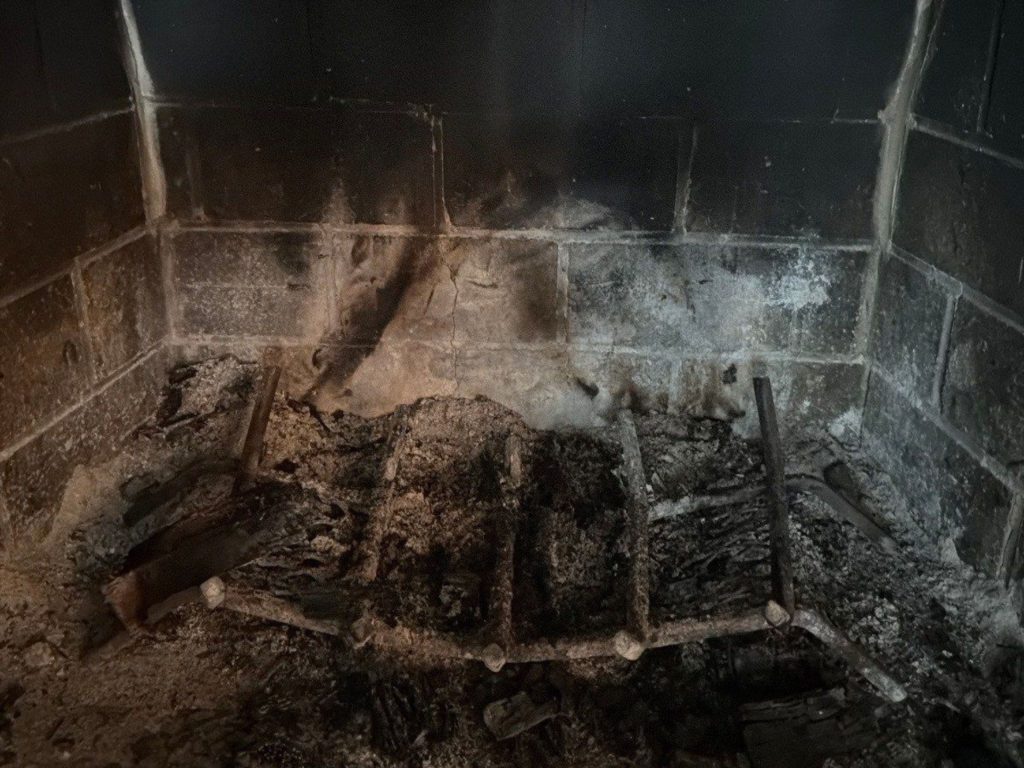
Some soot after using a fireplace is normal. Heavy, thick, sticky, or shiny deposits are more concerning.
Creosote can take several forms as it accumulates. More hardened deposits can adhere tightly to the flue and may require professional equipment to remove effectively.
Seeing dark buildup around accessible parts of the fireplace does not tell you exactly what condition the entire flue is in. Much of the chimney is hidden from view.
If you notice substantial or glossy buildup, schedule a professional chimney inspection and cleaning rather than trying to judge the condition of the entire chimney from the fireplace opening.
4. The Damper Is Difficult to Open or Close
The damper controls the opening between the fireplace and chimney and helps regulate airflow.
If the damper becomes difficult to operate, appears coated with heavy soot or creosote, or does not open and close properly, it should be checked.
Buildup around the damper can interfere with its movement. However, a difficult damper can also have mechanical or corrosion-related problems.
A chimney professional can examine the damper and surrounding area and determine whether cleaning or repair is needed.
5. It Has Been More Than a Year Since Your Last Inspection or Cleaning
If you use your fireplace regularly and cannot remember the last time the chimney was professionally inspected, that is a good reason to schedule an appointment.
There is no universal cleaning interval that applies to every chimney. How quickly deposits accumulate depends on factors such as fireplace use, wood type, burning practices, and chimney conditions.
For that reason, homeowners should have their chimney inspected regularly and cleaned whenever the inspection shows that deposits or other conditions require it.
Annual inspection is especially important for fireplaces that are used frequently.
6. You Suspect a Chimney Fire Has Occurred
A chimney fire can sometimes produce obvious signs, but it is not always easy for a homeowner to recognize.
Possible signs include:
- A loud cracking or popping sound from the chimney
- An unusually intense fire
- Dense smoke or flames coming from the chimney top
- A strong burning smell
- An unusually hot chimney or nearby surfaces
- Damage to parts of the chimney after a fire
If you suspect that a chimney fire has occurred, do not use the fireplace again until it has been professionally evaluated.
A chimney fire can damage the flue liner and other chimney components. A more detailed inspection may be recommended to determine whether the system has sustained damage.
Cleaning may also be necessary to remove remaining deposits before the fireplace is used again.
7. Dark Flakes or Debris Are Falling Into the Fireplace
Finding unusual dark flakes, chunks, or other debris inside the firebox can indicate that something inside the chimney needs attention.
The material could be creosote deposits, soot, masonry, or deteriorating chimney components. The appearance alone cannot identify the source.
Do not assume that falling debris is harmless.
A professional inspection can help determine where the material is coming from and whether the chimney needs cleaning, repair, or further examination.
What Should You Do If You Notice These Signs?
If your fireplace is showing any of these warning signs, stop using it until you know what is causing the problem.
The next step is to arrange a professional chimney inspection. Depending on what the technician finds, fireplace chimney cleaning services may be recommended to remove accumulated soot, creosote, or other deposits.
Cleaning is not always the answer to every chimney problem. For example, smoke entering the room can be caused by an obstruction, damper problem, chimney design, or other ventilation issue. An inspection helps determine the actual cause.
Why Professional Chimney Cleaning Matters
Chimney cleaning is more than removing the visible ash from the fireplace.
Deposits can accumulate farther up the flue where homeowners cannot see them. Professional chimney cleaning equipment is designed to reach these areas and remove deposits that ordinary household cleaning cannot address.
A professional can also identify conditions that may require additional attention, such as:
- Excessive creosote
- Soot buildup
- Obstructions
- Damaged flue components
- Masonry deterioration
- Damper problemsSigns of water intrusion
This combination of cleaning and inspection gives homeowners a better understanding of the chimney’s condition before they continue using the fireplace.
How Often Should a Fireplace Chimney Be Cleaned?
The answer depends on how the fireplace is used and how quickly deposits accumulate.
A chimney that is used frequently may require cleaning more often than one that is rarely used. The type of wood burned, how fires are operated, and the condition of the chimney can also affect buildup.
Instead of relying only on a fixed calendar date, have the chimney inspected regularly and clean it when deposits or other conditions indicate that cleaning is needed.
If you are unsure when the chimney was last inspected or cleaned, scheduling a professional inspection is a practical place to start.
Frequently Asked Questions
What is the biggest sign that a chimney needs cleaning?
Heavy creosote or soot buildup, smoke entering the room, unusual chimney odors, and a long gap since the last professional cleaning can all indicate that the chimney needs attention.
A professional inspection is the best way to determine whether cleaning is actually required.
Can I use my fireplace if I smell creosote?
A strong or unusual creosote-like odor should not be ignored. If the smell is persistent, have the chimney inspected before continuing to use the fireplace.
Odor alone cannot tell you how much creosote is present, so a professional assessment is recommended.
How do I know if I have a chimney fire?
Possible warning signs include loud cracking or popping sounds, an unusually intense fire, flames or heavy smoke at the chimney top, an intense burning smell, or unusually high temperatures around the chimney.
If you suspect a chimney fire, stop using the fireplace and have the chimney professionally inspected before using it again.
Does every chimney need to be cleaned every year?
Not necessarily. The required cleaning frequency depends on fireplace use, the amount of deposits present, and other conditions.
However, regular inspection is important, particularly for frequently used fireplaces. The inspection can determine whether cleaning is needed.
Can chimney cleaning fix smoke coming into the house?
It can, if buildup or an obstruction is contributing to the problem. However, smoke entering the room can have several causes, including damper issues, draft problems, chimney design, and ventilation conditions.
That is why the chimney should be inspected rather than assuming cleaning alone will solve the problem.
Schedule Fireplace Chimney Cleaning Services in Virginia
A chimney problem is easier to address when it is identified before it becomes a larger issue.
If you notice unusual odors, smoke entering the room, visible buildup, falling debris, or any other change in fireplace performance, consider having the chimney professionally inspected before using it again.
A Step in Time Chimney Sweeps provides professional fireplace chimney cleaning services throughout Virginia Beach, Richmond, Northern Virginia, and surrounding areas.
Our team can inspect the chimney, identify visible conditions, and recommend cleaning or additional service when needed.
Call 833-CHIMNEY to schedule your chimney service.