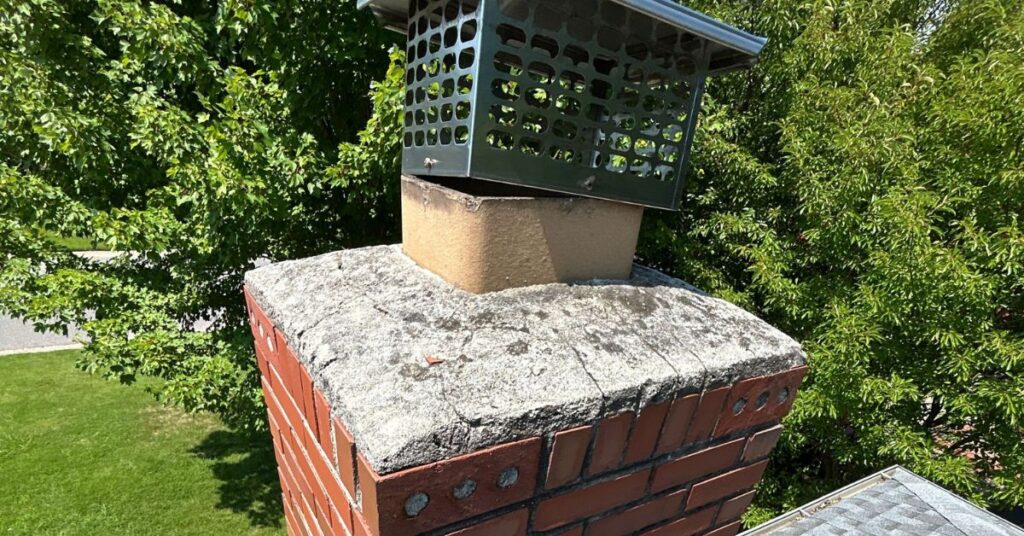
If you are seeing cracks or mortar loss in your chimney, you must contact masonry repair experts near you to ensure the structural integrity of the chimney stays intact. But wait, that’s not all. There are more signs that define the need for exterior masonry repairs, and there are several types of masonry repairs that you should be aware of.
It’s time to be more aware and responsible now. Here, we will talk about everything about masonry repairs, the different types, and when you actually need one.
About Masonry Chimneys and Exterior Masonry Repairs
Masonry Chimneys are of great relevance for homeowners. From improved aesthetics, to adding a great architectural character, to enjoying a cosy atmosphere during the winters, there are indeed endless reasons why homeowners in Virginia and almost everywhere love to have chimneys in their homes.
But to enjoy the perks, it is essential for you to keep a check on the health of your chimney, meaning you should be aware of when your chimney needs repairs, especially on the exterior portion.
“Why emphasise the exterior?”
Broken bricks and mortar, or any other exterior damage in your chimney, can lead to water intrusion and cause severe structural damage, which may translate into expensive repairs.
Now that you know the relevance, let’s address exterior masonry repairs and how it is different from other masonry repairs in chimneys.
What is Exterior Masonry Repair in Chimneys?
Masonry chimneys have been a top pick of homeowners in Virginia for their durability and ability to function at higher temperatures. Not just that, masonry chimneys offer excellent thermal insulation and offer better design options to fit in the architectural style of your home.
But, despite these advantages, masonry chimneys still require inspection and cleaning frequently, and any needed repairs should be addressed with utmost priority.
Exterior masonry repair refers to the work where experienced professionals address and repair the damage caused to the outer bricks of the chimney, or the concrete part that is responsible for the structural integrity of the chimney. The process also covers cracked chimney crowns, leaning or tilting of the chimney, or damaged flashing.
Types of Exterior Masonry Repairs
Chimneys are subject to harsh weather, temperature fluctuations, moisture, and structural stress in almost every season. With time, these conditions result in a range of problems in the masonry that require timely attention to ensure the chimney’s safety, functionality, and look.
Below, we discuss the different types of masonry chimney repairs, their estimated costs, and what is covered under different repair tasks.
1. Cracked, Chipped, or Missing Bricks Repair
Broken or cracked bricks are most commonly a result of water entry combined with freeze-thaw action. Water seeps into the bricks, and freezing causes the water to expand, which leads to breaking off of the bricks. General wear and tear can also lead to this situation.
2. Repointing or Tuckpointing (Deteriorated Mortar Joints)
Mortar joints deteriorate over the course of time because of exposure to rain, snow, and weather changes. Acid rain or incorrect mixtures of mortar at the time of original construction also lead to quicker decay. Water leakage makes the condition worse, as water tends to make the mortar disintegrate.
3. Cracked or Damaged Chimney Crown
The crown of the chimney is a concrete slab on top of the chimney, intended to prevent rain and snow from entering the flue. Cracks are caused by thermal expansion, old materials, substandard original work, or insufficient slope, which creates water pooling. Know here signs your chimney crown needs repair.

4. Repairing or Replacing Faulty Flashing
Flashing is the metal (often aluminum or copper) placed where the roof and chimney join to stop leaks. Rust, storm deterioration, roof material movement, or improper installation causes damage. Flashing may loosen or become disengaged from the surface over time and let water in.
5. Repairing a Leaning or Tilting Chimney
A leaning chimney is a serious sign of structural problems, like a compromised foundation, erosion of support soils, or mis-sized footings. It may also be caused by chronic water intrusion, which gradually weakens the interior structure, or seismic motion in certain locations.
I have an excellent hand in doing masonry work. Just show me a video, and I will do it on my own.
Okay, if you think the same way too, you most likely might end up summoning some serious trouble
Can DIY Prove Useful in Masonry Chimney Repair?
DIY is only useful in simple and harmless repairs, such as filling little cracks in mortar or sealing a crown. Most repairs on chimneys entail working at heights, structural repairs, and water sealing, which are best left to experts. Errors can create more damage, leaks, or even chimney collapse
DY is ideal for:
- Replacing 1–2 ground-level bricks
- Sealing crown for small cracks
- Touching up mortar
Not Suitable for:
- Structural problems (tilting chimneys)
- Flashing replacement
- Large-scale tuckpointing
- Working at heights without suitable safety equipment
Related Reading: Things You Should Avoid While Making Minor Repairs By Yourself To Your Chimney
The Best Masonry Chimney Repair Services in Virginia
A Step in Time Chimney Sweeps has a team of experts who have been delivering excellent masonry chimney repair services in Virginia and other regions. Our certified technicians have years of experience and are known for top-rated services, as evident in our Google reviews.
If you are confused whether you need a repair or not, call our chimney inspectors, and we will give you a detailed breakdown of what repairs are required.
With A Step in Time Chimney Sweeps, you can stay relaxed about all types of exterior masonry chimney repairs. Call +1 (757) 244 – 6639, +1 (804) 244 – 6639 to book our service.