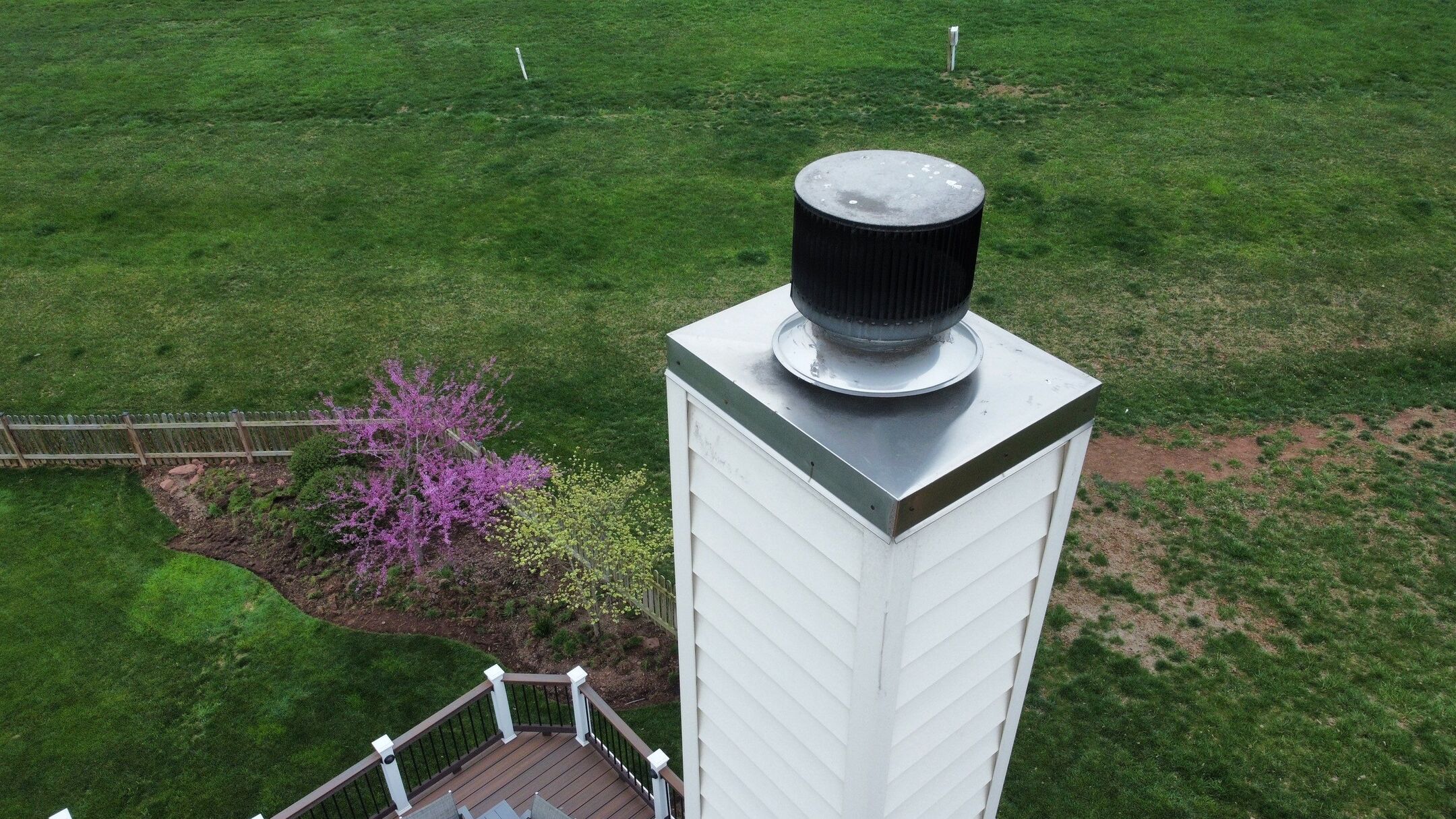
If a technician has told you that your chimney needs a cap, your first question is probably: how much is this going to cost?
The brief answer for homeowners in Virginia for 2026: most chimney cap installations cost anywhere from $200 to $850, which includes both the cost of the cap and labor involved. Where you fall in this price range will depend on what kind of chimney you have, cap material, and number of flues needing protection.
But before we get into the numbers, it is worth understanding what a chimney cap actually does – because skipping it is one of the more expensive decisions a Virginia homeowner can make.
What Is a Chimney Cap and What Does It Do?
A chimney cap is a metal covering installed at the top of your chimney flue. It sits over the flue opening and is typically held in place by a mesh cage or bracket. Its job is to block everything that should not be going into your chimney: rainwater, animals, debris, and wind-driven embers.
That sounds simple, but the consequences of not having one are significant – especially in Virginia, where humidity, coastal moisture, and seasonal storms put chimneys under more stress than in drier climates.
How Much Does a Chimney Cap Cost in Virginia? (2026 Prices)
The below table will give an indication of the cost of chimney caps in Virginia for the year 2026:
The average nationally is $300-$335 for any type of cap, including labor. Pricing in Virginia is about the same, except homes located on the coast, specifically Virginia Beach and Hampton Roads, will cost somewhat more because of the need for more corrosion-resistant caps made of stainless steel or copper.
What Affects the Final Price
Cap material is the biggest variable. Galvanized steel is the cheapest option but has the shortest lifespan – typically three to five years in Virginia’s humidity before rust sets in. Stainless steel lasts ten to twenty years with minimal maintenance and is what most Virginia chimney professionals recommend. Copper lasts the longest (twenty to thirty years or more) and is the premium option.
The difference between single flue and multi-flue should be considered as well. The regular single flue cap is the common model and can be used on all household chimneys. The multi flue cap is custom-made and covers the whole crown of a chimney where there is more than one flue.
Roof access affects labor. A chimney on a steep-pitched roof or a three-story home takes more time and equipment to access than a standard residential roofline. Expect labour costs to reflect that.
Existing damage can add to the total. If the chimney crown (the concrete or mortar surface surrounding the flue at the top) is cracked or deteriorated, it typically needs repair before a new cap can be properly installed. Crown repair costs range from $200 to $1,500 depending on the extent of the damage.
Why Skipping a Chimney Cap Costs More - Sometimes Much More
An uncapped chimney is an open hole in the top of your home. In Virginia, that means:
1. Water gets in every time it rains. Chimney interiors are not designed to handle direct water exposure. Over time, water penetration deteriorates the mortar joints, flue liner tiles, and firebox components. A chimney liner replacement costs $1,500 to $5,000. Firebox rebuilds start at several thousand dollars. A chimney cap costs $200 to $850.
2. Animals move in. Racoons, squirrels, and birds are attracted to uncapped flues as nesting sites. Once an animal gets into a flue, removal costs $150 to $500, and any nesting material left behind creates a blockage and a fire hazard. In Virginia Beach, Northern Virginia, and Richmond, wildlife intrusion in uncapped chimneys is extremely common.
3. Debris such as leaves and twigs builds up inside uncapped chimneys, which restricts air flow and creates an environment in which carbon monoxide can become trapped inside instead of being allowed to vent outside.
4. On windy days, an uncapped chimney allows cold air to drive straight down the flue and into your home – increasing heating costs.
5. A chimney cap with a mesh cage prevents live embers from escaping the flue and landing on your roof or nearby combustible material. This is particularly relevant for wood-burning fireplaces.
This simple math makes it clear that a chimney cap made of stainless steel, which can be fitted at a price of between $300 and $550 in Virginia, would survive for ten to twenty years with little upkeep. Meanwhile, fixing problems caused by not having such a cap typically costs between ten and twenty times as much.
What Type of Chimney Cap Does a Virginia Home Need?
The right cap depends on your chimney type and location.
For standard masonry chimneys with a single flue, a stainless steel single-flue cap is the most practical choice for Virginia homes. It resists rust, handles temperature cycling well, and carries warranties of ten years or more from most manufacturers.
However, when the chimney has more than one flue opening, then a special multi-flue cap that fits the whole crown will be preferred since it offers full protection for all the flue openings without leaving any open spaces between them.
In the case of Virginia Beach and the entire coast of Hampton Roads, we suggest using either stainless steel or copper, as opposed to galvanized material. This is because the salt content in the coastal Virginia area speeds up rusting of galvanized caps; therefore, its life span may only last from two to three years instead of five.
For prefabricated (factory-built) fireplaces, you will need a chase cover and air cooled chimney cap. Chase covers are flat metal covers that sit on top of the prefabricated chimney chase, serving a similar role to the concrete crown on a masonry chimney to help shed water off the top of the chimney. The prefabricated fireplace flue, which is typically a double or triple wall pipe allowing flue gasses to leave through the center pipe and air to enter through the outer pipes to cool the system, gets covered with a separate cap designed specifically for these air cooled systems. A prefabricated fireplace is designed to work as a system with specific components it was UL tested with and should never be capped with a basic masonry chimney cap, as this could pose a fire risk and alter the UL listing of the factory built fireplace system. In many homes with both galvanized air cooled caps and chase covers, both components rust at a similar rate and will require replacement together with a new stainless steel chase cover and air cooled cap to keep water from entering the flue and causing interior rust that will eventually require replacement of the full factory built fireplace system.
How Long Does Chimney Cap Installation Take?
For a standard single-flue residential cap, installation typically takes under an hour once the technician is on-site. The cap is measured, fitted, and secured. Custom multi-flue caps may require a measurement visit followed by a separate installation appointment once the cap is fabricated.
Most chimney companies – including A Step in Time – will install a cap during a standard inspection or sweep appointment if one is needed, combining the visit into a single trip.
Situations We Are Commonly Called For
• The technician noted that the chimney does not have any cap at all, and the homeowner would like to get a quote prior to any decisions being made.
• Rust streaking on the exterior of the chimney implies that the current cap has failed, and needs to be replaced.
• A rodent has entered the flue, and the homeowner wants a cap placed on the chimney after the removal process.
• Water is entering the firebox, and the chimney crown has been damaged due to water penetration.
• The house will be sold, and a problem with the cap has been discovered by the buyers’ inspection.
Schedule a Chimney Cap Inspection or Installation
If your chimney does not have a cap – or if the one you have is rusting, loose, or was flagged during an inspection – the fix is straightforward, and the cost is manageable.
A Step in Time Chimney Sweeps has been serving Virginia Beach, Richmond, Northern Virginia, and the surrounding region since 1998. We assess cap condition during every chimney inspection and can install or replace a chimney cap during the same visit in most cases.
Call 833-CHIMNEY to schedule your inspection or get a chimney cap quote.
Level 1 Inspection: $5.
Frequently Asked Questions
Yes – particularly in Virginia. The combination of humidity, seasonal storms, and coastal salt air in regions like Virginia Beach and Hampton Roads makes chimney caps more important here than in drier climates. Without a cap, Virginia chimneys are exposed to continuous water infiltration that accelerates mortar and liner deterioration at a faster rate than in less humid states.
The best material to be used in most homes in Virginia would be stainless steel because it does not rust when there is high moisture, comes with at least a ten-year warranty, and is also more resilient than galvanized steel in Virginia’s climate. The best quality material is copper but it costs much more compared to other materials. Galvanized steel is the cheapest material and has a very low lifetime.
Yes from a technical perspective, but there is always the issue of safety when working on a roof top, not to mention that a badly-installed cap can create more problems than solving them, as it may cause water seepage through the seams or even provide an entry point for animals. It would normally be best to have your cap installed by a professional, whose labor costs are usually quite reasonable.
These include presence of rust, cap being loose or having been moved out of its initial position, lack of mesh screens, and moisture inside the fire box. In every chimney inspection process, checking of cap status should be considered a normal practice. Get more understanding from here.
Galvanized steel caps: every three to five years in Virginia’s climate. Stainless steel caps: every ten to twenty years. Copper caps: twenty to thirty or more years. Annual inspection of the cap condition helps catch deterioration before it progresses to water intrusion.
Water penetration, animal entry, debris accumulation, and increased fire risk from escaping embers are the primary consequences. Over time, the cost of repairing damage from an uncapped chimney significantly exceeds the cost of the cap itself.