A level two chimney inspection is a detailed, NFPA 211-mandated evaluation of your entire chimney system that includes a video scan of the flue interior and a physical inspection of all accessible areas, including attics, crawl spaces, and basements. This goes far beyond what a standard Level 1 annual check covers. If you are buying or selling a home in Virginia, have recently experienced a chimney fire, or switched your heating appliance, this is the inspection you are legally and practically required to get. Understanding exactly what it involves, when it is triggered, and what it costs puts you in control of your home’s safety and your real estate transaction.
What is a level two chimney inspection?
A Level 2 chimney inspection is the middle tier of the three-level system defined by NFPA 211, the national standard for chimneys, fireplaces, and venting systems. Level 2 includes everything in Level 1 plus a video scan of the full flue interior and a physical check of all accessible enclosed spaces connected to the chimney system. Level 1 covers only the readily accessible exterior and interior portions you can see without moving anything. Level 3 involves partial demolition to reach concealed areas. Level 2 sits between those two extremes and handles the majority of real-world situations where something has changed or a hazard is suspected.
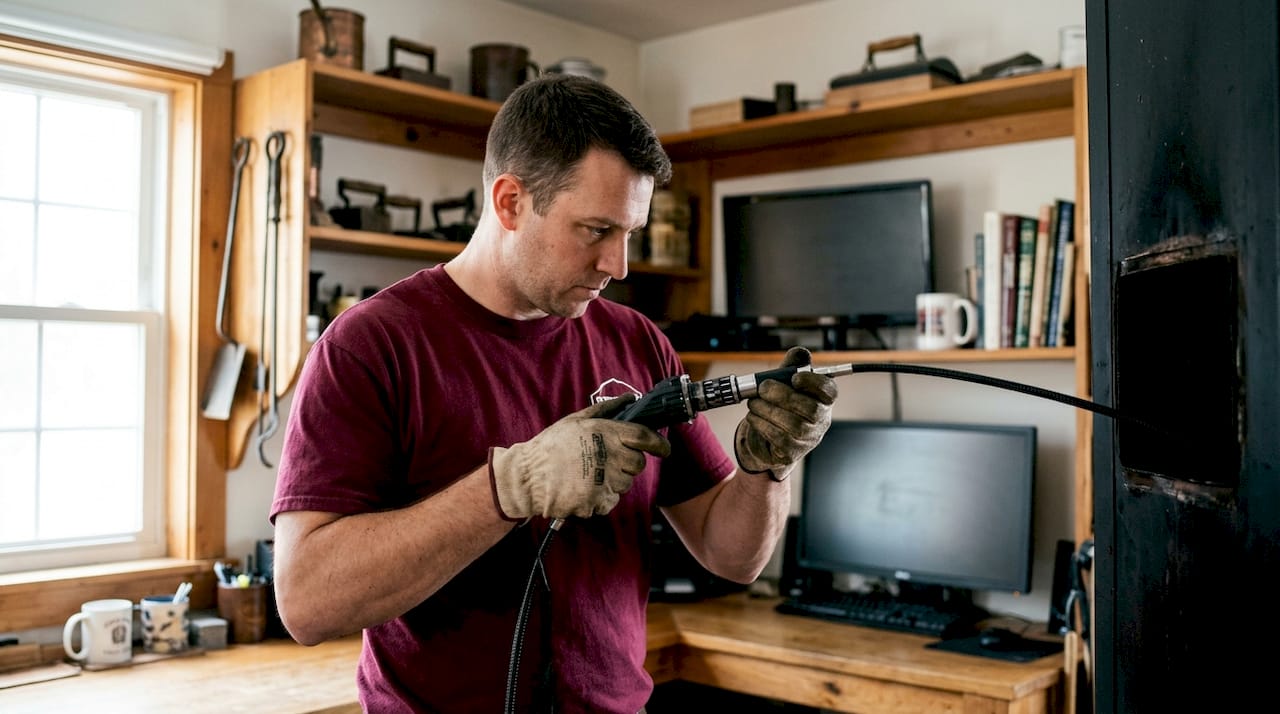
The video scan is what makes a Level 2 assessment fundamentally different. A trained inspector feeds a specialized camera through the flue from top to bottom, capturing footage of the liner, joints, and interior walls. Video scanning reveals hidden hazards like cracked liner sections, mortar joint failures, and blockages that are completely invisible from the firebox opening or the rooftop. No amount of flashlight work substitutes for this footage.
What triggers the need for a Level 2 inspection?
NFPA 211 defines specific conditions that require a Level 2 inspection rather than a routine Level 1 check. These are not suggestions. Triggers include fuel type change, appliance replacement, relining, property sale, chimney fire, and storm damage. Each of these events creates conditions where hidden damage or incompatibility is plausible, and a visual-only check is not sufficient to rule it out.
The most common triggers Virginia homeowners encounter include:
-
Change in fuel type. Switching from wood to gas, or gas to pellet, changes the flue temperature and combustion byproducts. The existing liner may not be rated for the new appliance.
-
New or replacement appliance. Installing a new insert, stove, or furnace connected to the chimney requires confirming the flue is compatible and undamaged.
-
Property sale or transfer. Real estate transactions require a Level 2 inspection with video documentation. This is not optional, and skipping it can delay or derail a closing.
-
After a chimney fire. Operating after a chimney fire without a Level 2 risks undetected heat damage that can cause a second, more destructive fire.
-
After a natural disaster. Earthquakes, severe storms, and lightning strikes can shift or crack the chimney structure in ways that are not visible from outside.
-
When a Level 1 inspection raises concerns. If the Level 1 check identifies something suspicious, the inspector escalates to Level 2 before clearing the system for use.
Pro Tip: Ask your inspector to confirm in writing which NFPA 211 trigger applies to your situation before the inspection begins. This protects you if questions arise during a real estate transaction.
A common misconception is that Level 2 is simply a “more thorough” version of Level 1 that you can request at any time for peace of mind. It is actually a condition-based requirement. Misapplying inspection levels creates liability for the inspector and can produce a report that does not satisfy the legal or insurance standard you actually need.
How is a Level 2 inspection performed?
A Level 2 chimney assessment follows a structured process that typically takes between 60 and 120 minutes, compared to 30 to 60 minutes for a Level 1. That extra time reflects the additional scope, not inefficiency. Here is what the process looks like from start to finish:
-
Level 1 baseline check. The inspector examines all accessible exterior and interior portions of the chimney, including the firebox, damper, smoke chamber, and visible flue sections.
-
Video scan of the full flue. A specialized camera, such as a Chim-Scan or Wohler VIS system, is inserted into the flue. Only specialized chimney cameras meet Level 2 standards. Phone cameras and standard inspection cameras do not qualify, and an inspector using them is a red flag.
-
Inspection of accessible enclosed spaces. The inspector checks attic, crawl space, and basement areas where the chimney passes through or connects to the structure. This step catches clearance violations and hidden structural damage.
-
Photo and video documentation. The full video scan and supporting photos become part of the written report. Homeowners should request the full video and report before the inspector leaves the property.
-
Written findings and recommendations. The report identifies any deficiencies, rates their severity, and recommends repair, further investigation, or clearance for use.
Pro Tip: Review the video footage with your inspector on-site. Watching the scan in real time helps you understand exactly what was found and where, which makes follow-up repair conversations far more specific.
| Inspection element | What the inspector checks |
|---|---|
| Exterior masonry and crown | Cracks, spalling, crown condition, flashing integrity |
| Firebox and smoke chamber | Mortar joints, damper operation, smoke shelf debris |
| Full flue interior (video) | Liner cracks, joint failures, blockages, creosote buildup |
| Accessible enclosed spaces | Clearances, structural contact, hidden damage in attic or basement |
| Written and video documentation | Full report with footage provided to homeowner |
Level 2 inspections typically cost between $350 and $600 or more (approx), depending on chimney height, number of flues, and regional labor rates. In Northern Virginia and Richmond metro areas, expect pricing toward the higher end of that range.
Level 2 vs. Level 1 and Level 3: what are the differences?
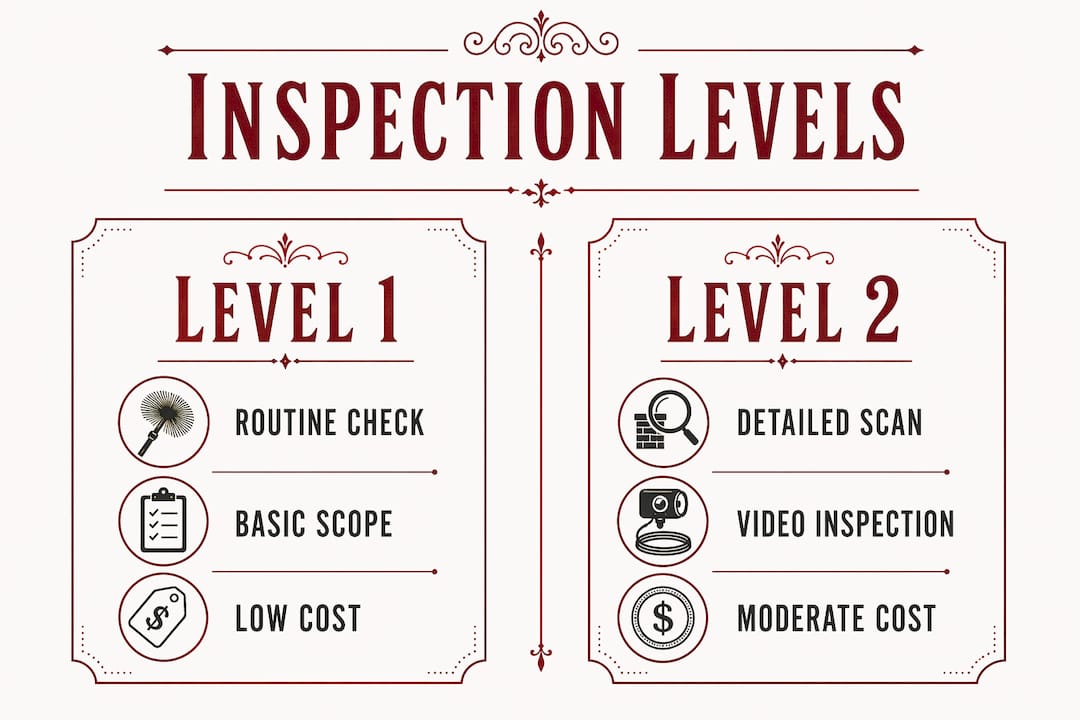
The three NFPA 211 inspection levels differ in scope, equipment, triggers, and cost. Choosing the wrong level is not just a minor inconvenience. It produces a report that fails to meet the legal or safety standard required for your specific situation.
| Inspection level | Scope | Equipment | Typical trigger | Approximate cost |
|---|---|---|---|---|
| Level 1 | Accessible exterior and interior | Flashlight, basic tools | Annual maintenance, no changes | $100 to $250 |
| Level 2 | All of Level 1 plus video scan and enclosed spaces | Specialized flue camera | System change, sale, fire, storm | $350 to $600+ |
| Level 3 | All of Level 2 plus partial demolition | Demolition tools, camera | Concealed hazard found in Level 2 | $1,000+ |
Level 1 covers routine annual checks with no system changes, while Level 3 is reserved for situations where the Level 2 video scan finds evidence of damage that cannot be fully assessed without opening walls or removing structure. Level 3 is rare and only recommended when the video evidence makes it necessary.
The practical implication for Virginia homeowners is straightforward. If nothing has changed and you are doing your annual sweep and check, Level 1 is appropriate. If you are buying a home, replacing an insert, or had a chimney fire last winter, Level 2 is required. If your Level 2 video shows something alarming that the inspector cannot fully evaluate, Level 3 may follow. A Level 2 video scan can trigger escalation to Level 3 when concealed hazards require demolition to assess properly.
Why Level 2 inspections matter for Virginia homeowners
Virginia’s real estate market moves fast, and chimney defects are one of the most common sources of post-closing disputes. A Level 2 inspection protects both buyers and sellers by creating a documented, video-backed record of the chimney’s condition at the time of transfer. Real estate transactions commonly suffer delays when home inspectors miss the video documentation required by NFPA 211, because general home inspectors are not chimney specialists and often perform only a visual check.
Beyond real estate, the safety case is direct. A cracked flue liner can allow combustion gases, including carbon monoxide, to enter living spaces. Structural gaps in the chimney chase can expose framing to heat. Neither of these defects is visible without a video scan. Video scanning detects concealed damage that reduces fire risk in ways that no surface-level check can match.
For Virginia homeowners specifically, here is what to do with your Level 2 report:
-
Request the full video file, not just a summary or still photos. Photo documentation alone does not qualify as Level 2 compliance.
-
Confirm the inspector is certified by the Chimney Safety Institute of America (CSIA) or the National Fireplace Institute (NFI).
-
If defects are found, get repair estimates before closing. Do not accept a credit in lieu of repairs without understanding the actual scope of work.
-
Keep the report and video on file. Insurance claims after a chimney fire often require documentation of pre-event condition.
“A Level 2 inspection is not a formality. It is the only tool that gives you a documented, video-backed picture of what is happening inside your flue, which is the one place where serious chimney hazards actually originate.”
Key takeaways
A Level 2 chimney inspection is a required, condition-based evaluation under NFPA 211 that uses video scanning to detect hidden flue damage, and skipping it during a property sale or after a system change creates real legal and safety exposure.
| Point | Details |
|---|---|
| NFPA 211 defines the triggers | Level 2 is required after fuel changes, appliance replacement, property sale, chimney fire, or storm damage. |
| Video scan is non-negotiable | Only specialized cameras like Chim-Scan or Wohler VIS meet the standard. Phone cameras do not qualify. |
| Cost and time expectations | Expect $350 to $600+ and 60 to 120 minutes depending on scope and Virginia location. |
| Documentation is your protection | Always request the full video file and written report before the inspector leaves. |
| Wrong level creates liability | Performing a Level 1 when Level 2 is required produces a report that fails legal and insurance standards. |
What I’ve learned from watching homeowners navigate Level 2 inspections
The single biggest mistake I see Virginia homeowners make is treating the Level 2 inspection as a checkbox rather than a diagnostic tool. They schedule it because their real estate agent told them to, they get a report, and they file it away without watching the video or asking a single question. That is exactly backwards.
The video footage is the product. Everything else, the written summary, the cost estimate, the inspector’s verbal walkthrough, flows from what that camera captures inside the flue. When I talk to homeowners who had a chimney fire six months after buying a home, the conversation almost always reveals that a Level 2 was performed but nobody reviewed the footage carefully. The liner crack was there on the tape. Nobody caught it because nobody looked.
My practical advice: schedule your Level 2 inspection when you have 30 extra minutes to sit with the inspector and watch the scan in real time. Ask them to stop and explain anything that looks unusual. If they cannot tell you what you are looking at, that is a problem with the inspector, not the chimney. A certified CSIA or NFI professional should be able to narrate the footage clearly.
One more thing most homeowners miss: the post-inspection follow-up. If the report recommends repairs, get those estimates before you close on a property or before heating season starts. Repair costs for a cracked liner in Richmond or Northern Virginia can range from a few hundred dollars for a spot repair to several thousand for a full reline. Knowing that number before you commit to a purchase or a winter of heavy fireplace use is the entire point of the inspection.
— Raymond Gessner, CEO, A Step in Time Chimney Sweeps
Get a certified Level 2 inspection in Virginia
Chimneysweep serves homeowners across Virginia, including Richmond, Northern Virginia, and Virginia Beach, with professional chimney inspections that meet NFPA 211 standards. If you are buying a home, replacing an appliance, or recovering from a chimney fire, their certified inspectors use proper video scanning equipment and deliver full documentation, not just a summary sheet. Scheduling is straightforward, and their team can explain exactly which inspection level applies to your situation before the appointment. Visit Chimneysweep’s inspection services to book your Level 2 inspection or get answers about what your chimney system needs.
FAQ
What is a Level 2 chimney inspection?
A Level 2 chimney inspection is a detailed evaluation defined by NFPA 211 that includes a video scan of the full flue interior and inspection of accessible enclosed spaces like attics and crawl spaces, in addition to everything covered in a Level 1 check.
When is a Level 2 chimney inspection required?
NFPA 211 requires a Level 2 inspection after a fuel type change, appliance replacement, property sale, chimney fire, or storm damage. It is also required when a Level 1 inspection raises concerns that need further investigation.
How much does a Level 2 chimney inspection cost?
Level 2 inspections typically cost between $350 and $600 or more (approx.), depending on the number of flues, chimney height, and location. Virginia homeowners in Northern Virginia and Richmond should expect pricing toward the higher end of that range.
How long does a Level 2 chimney inspection take?
A Level 2 inspection typically takes 60 to 120 minutes, compared to 30 to 60 minutes for a Level 1. The additional time reflects the video scanning process and inspection of enclosed spaces.
Can a home inspector perform a Level 2 chimney inspection?
General home inspectors are not chimney specialists and frequently miss the video documentation required by NFPA 211. A certified CSIA or NFI professional chimney inspector with proper camera equipment is required for a compliant Level 2 inspection.